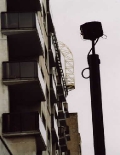
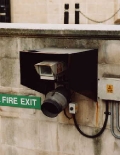
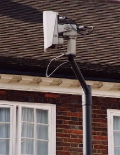
| Examples of CCTV in operation We are actually using our five 'banner' photographs as brief examples
of what may not always be considered as good practice:- 1. In very well lit locations, why spend serious money on two Infra Red
illuminators? Firstly, there is an ongoing cost to routinely replace the bulbs
when they burn out. Secondly, with this type of camera mounting, it should not
be used where the building material is either a particularly soft type of stone or,
a less than firmly bonded cladding material. In addition, proper cable management
should be incorporated to prevent any risk of 'chaffing' as the camera moves.
2. Using a 'non standard' camera design can reduce the deterrant effect,
particularly if the unit is not recognised as a working camera.
3. An array of 7 CCTV cameras used for traffic management may look extremely
impressive, but the adoption of number plate recognition (ANPR) has absolutely
no benefits when confronted with a cloned vehicle. In effect, this is a hugely
expensive array of not terribly clever cameras. When it works, it works well,
but it should not be regarded as totally reliable.
4. Using Infra Red lamps next to a camera, is a tidy if not lazy way of providing
almost shadowless illumination. Unfortunately in this example,the less than sensible
approach of installing the lamp directly underneath the housing, will not only allow
the heat to rise up and cook the camera, but to further increase this effect the installers
have thougthfully provided a nice solid steel cooker hood! Note also that the electrical
services box is well within the reach of anyone leaning over the low level parapet wall.
5. Once again, a fine example of a London traffic monitoring camera ... that isn't.
Shortly after this unit was installed (about five years ago), at great expense to
the ratepayers, the control room operator must have decided to see how far down
the camera can tilt, only sadly, it never quite managed to make it back up again!
The problem here is that with the combined weight of the camera, a half decent
motorised zoom lens, and the forward mounted wiper unit, the installer failed
to supply a pan and tilt head with an adequate weight capacity.
It may well have been acceptable on paper, but you have to allow for increased
capacity with an Over the Top (OTT) head, and also make extra allowances for
the added demands of snow, ice, and high wind loadings (or all three!).
Note also the cameras extremely close proximity to someones bedroom window!
(Three years after failing, the Pan and Tilt head was eventually replaced). | |